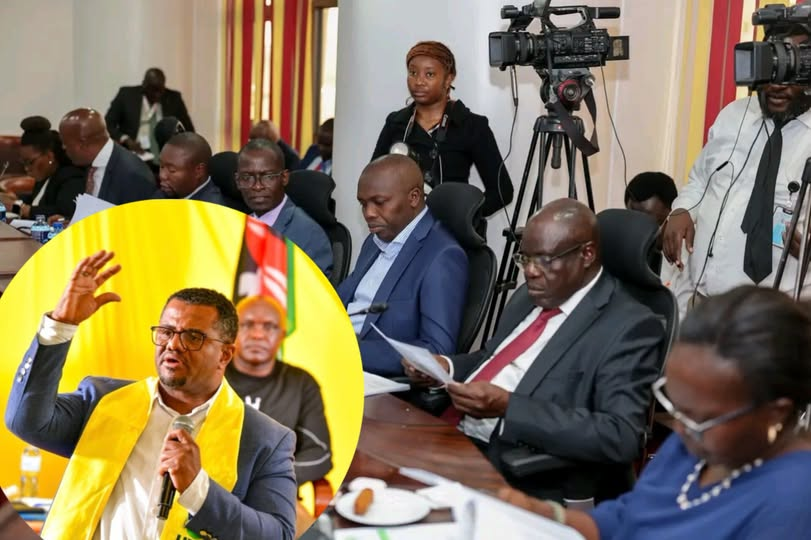
IEBC Issues UDA Secretary General Hassan Omar With Stern Warning Over Electoral Code Violations
The Independent Electoral and Boundaries Commission (IEBC) has found United Democratic Alliance (UDA) Secretary General Hassan Omar in breach of two provisions of the Electoral Code of Conduct over remarks he made during a political rally in Mombasa.
In a determination released on Wednesday, November 4, 2026, the IEBC Electoral Code of Conduct Enforcement Committee ruled that Omar violated paragraphs 6(k)(i) and 6(l) of the electoral regulations.
The committee consequently issued him with a formal and strict warning, alongside a severe caution, directing him to avoid statements or actions that could be interpreted as encouraging electoral malpractice or eroding public confidence in the integrity of elections.
The case stems from remarks Omar made at a public rally in Mombasa on September 11, 2026, which raised concerns over comments suggesting the use of biometric identification belonging to deceased persons to facilitate voting in their names.
Omar was subsequently summoned to appear before the committee on October 21, 2026, where he attended in person accompanied by his lawyer and was given an opportunity to respond to the allegations.
In his defence, Omar explained that his remarks were figurative and intended to encourage voter registration and participation. He also provided a subsequent clarification.
The committee considered his explanation and noted that there was no evidence of an actual electoral incident resulting from the remarks. However, it maintained that the statements, when interpreted in their original Kiswahili form and context, could be understood as advocating the use of a deceased person’s biometric details to cast a vote.
The commission warned that any further violation could attract more severe penalties under the Electoral Code of Conduct and applicable laws.
The IEBC also called on political leaders, candidates, political parties and their supporters to exercise responsibility and restraint in their public statements as preparations for the August 10, 2027 General Election continue.
The commission clarified that enforcing the electoral regulations was not intended to restrict legitimate political debate or freedom of expression, but to protect the credibility of the electoral process.