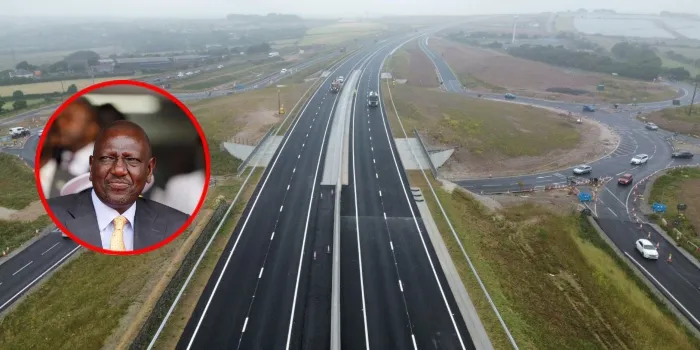
Ruto Unveils Plan to Expand and Dual 14 Major Highways Across Kenya
President William Ruto has announced an ambitious road infrastructure programme targeting 14 major highways across Kenya, aimed at easing traffic congestion, improving transport efficiency and strengthening connections between regional markets.
In his State of the Nation Address to Parliament on November 18, 2026, the President identified several key transport corridors earmarked for expansion and dualling, saying the investments would improve the movement of people and goods while supporting economic growth.
Among the priority projects is the Rironi–Naivasha–Nakuru–Mau Summit Highway, alongside the Kamandura–Maai Mahiu–Naivasha Road. The proposed dualling of the Nairobi–Mombasa Highway is also on the government’s agenda, with preparations reportedly at an advanced stage.
Other major highways targeted include:
- Mau Summit–Kericho–Kisii–Awendo–Kisumu Road.
- Kisumu–Busia Road.
- Mau Summit–Eldoret–Malaba Highway.
- Bomas–Ongata Rongai–Ngong–Karen Road.
- Kitengela–Isinya Road.
- Pangani–Muthaiga–Ndumberi Road.
- Makutano–Embu–Chuka–Maua Road.
- Marua–Nanyuki–Isiolo Road.
- Malindi–Mtwapa Road.
- Likoni–Ukunda–Msambweni–Lunga Lunga Road.
The projects are expected to improve connectivity between major towns, agricultural production zones, commercial centres and border crossings, while reducing the cost and time involved in transporting goods.
Ruto said the infrastructure programme would also complement ongoing construction of the Nithi Bridge, which is expected to improve transport along the busy Meru–Tharaka Nithi route.
The President maintained that expanding the country’s highway network would strengthen regional trade, improve access to markets and create opportunities for businesses and communities.
The announcement forms part of the government’s wider long-term infrastructure strategy, which targets tarmacking an additional 28,000 kilometres of roads and dualling 2,500 kilometres of highways over the next decade.
The proposed developments are expected to benefit motorists and businesses across the Rift Valley, Western Kenya, Central Kenya, Nairobi metropolitan area and the Coast, although individual project timelines and implementation arrangements will determine when communities begin experiencing the improvements.